Quick take:
Polybutylene (PB) plumbing was widely installed from the late 1970s through the mid‑1990s and is linked to unpredictable failures and possible insurance issues. A pre‑listing inspection can identify PB before you hit the market.
What is Polybutylene (PB) Plumbing?
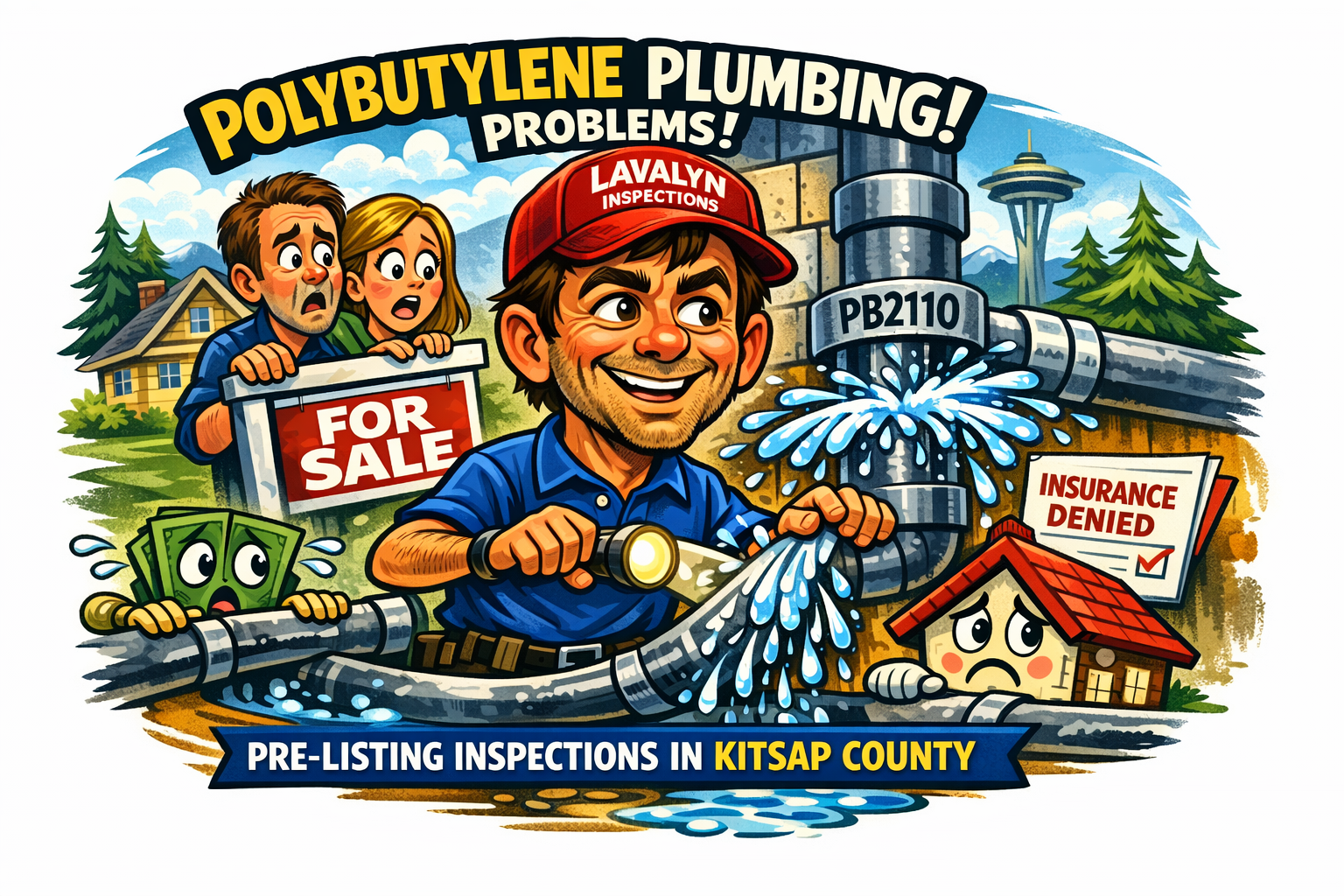
Polybutylene is a flexible plastic supply pipe used in many homes built or re‑piped from the late ’70s to mid ’90s. It’s often gray (but can be blue, black, or silver) and may be marked “PB2110.” The concern is its history of premature leaks and sudden failures, particularly at fittings.

Why It Matters to Sellers
Polybutylene plumbing can create significant complications for homeowners preparing to sell. Many insurance carriers have restrictions, surcharges, or outright denials for homes with PB piping, which means buyers may struggle to secure affordable coverage—or any coverage at all. This often leads to last‑minute renegotiations, credit requests, or demands for full system replacement. Even when buyers remain interested, the uncertainty around insurance and future plumbing costs can reduce offer strength or limit your pool of potential buyers. When PB shows up unexpectedly during the buyer’s inspection, it can derail momentum and introduce stress at the worst possible time.
Sellers are also at a disadvantage because PB is often hidden behind walls, under floors, or in crawlspaces, meaning most homeowners don’t realize their property contains it. This makes disclosure tricky: even unintentional nondisclosure can damage trust and jeopardize a transaction once PB is uncovered.
How a Pre‑Listing Inspection Helps
By identifying polybutylene early through a pre‑listing inspection, sellers gain the ability to plan ahead—pricing appropriately, disclosing transparently, and deciding whether repairs or replacement make sense before listing. This proactive approach protects negotiating power, reduces surprises during escrow, and helps ensure a smoother, more predictable closing process.
Schedule Today
Call/Text: 360‑559‑1553
Email: info@lavalyn.com
Web: lavalyn.com


Leave a Reply