
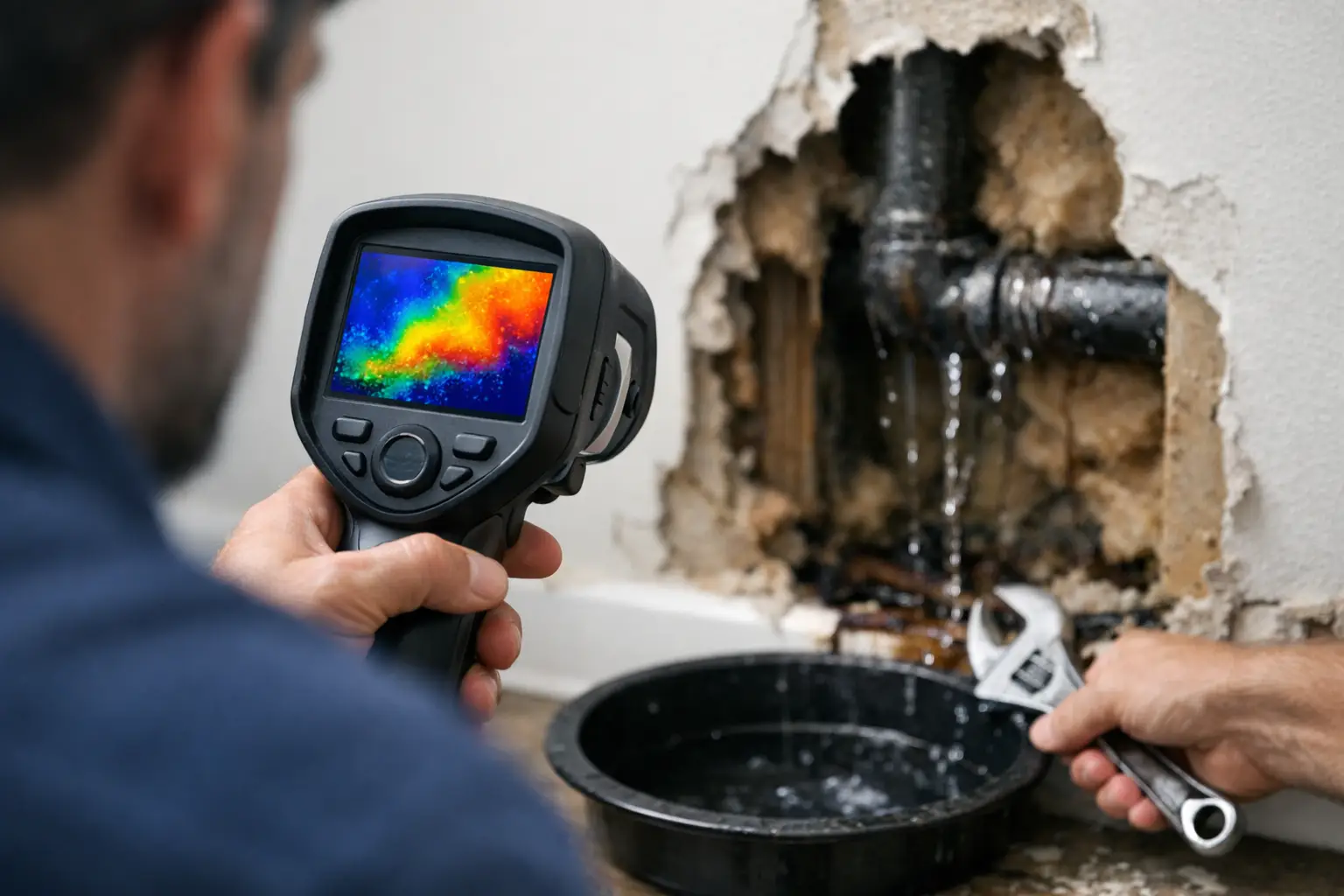
A water stain is often the last chapter of a leak, not the first. By the time paint bubbles, drywall softens, or a musty odor becomes obvious, moisture may have already traveled beyond the source. Thermal imaging for water leaks gives an inspector a noninvasive way to look for unusual temperature patterns that can point to hidden moisture before visible damage tells the full story.
For buyers, sellers, and homeowners, that information can change the next decision. It may support a targeted plumbing repair, help determine whether a roof or exterior detail needs closer evaluation, or identify an area where moisture testing is warranted. It is valuable evidence, but it is not a substitute for experienced inspection, moisture-meter readings, or opening an area when conditions call for it.
What a Thermal Camera Actually Sees
A thermal camera does not see water. It detects infrared energy and displays surface-temperature differences as a color image. Materials cool and warm at different rates, and wet building materials often behave differently than dry ones.
For example, a damp section of drywall may appear cooler than the surrounding wall when evaporation is occurring. A wet patch in a ceiling below a leaking pipe may also retain a different temperature after the heating system runs or after outdoor temperatures change. Those contrasts can create a thermal pattern worth investigating.
The key word is pattern. A single cool spot is not proof of a leak. It could be an air leak, missing insulation, a cold-water line, a framing member, or a change in wall material. A qualified inspector compares the image to visible conditions, the home’s layout, plumbing locations, weather, and readings from other inspection tools.
Where Thermal Imaging for Water Leaks Is Most Useful
Thermal scanning is particularly helpful where moisture can remain hidden behind finishes or within building assemblies. During a comprehensive inspection, it can help direct attention to areas that deserve a closer look rather than relying only on what is visible at the surface.
Bathrooms, Kitchens, and Laundry Areas
Supply lines, drain connections, dishwasher lines, refrigerator water lines, tubs, showers, and washing machines are common sources of interior moisture. Small leaks around these fixtures can affect cabinets, subfloors, adjacent walls, and ceilings below without immediately creating a dramatic stain.
Thermal imaging may reveal an irregular cool area near a shower wall, beneath a sink cabinet, or around the ceiling below a second-floor bathroom. A moisture meter can then help determine whether the material itself has elevated moisture content.
Roofs, Attics, and Ceilings
A roof leak does not always show up directly below the roof penetration that caused it. Water can travel along framing, wiring, roof sheathing, or insulation before reaching the ceiling. In the Pacific Northwest, intermittent rain and damp conditions can make these patterns especially difficult for homeowners to trace.
A thermal scan of ceilings, attic surfaces, and accessible roof-related areas may identify a suspicious signature. The inspector should also examine flashing, roof penetrations, roof-covering condition, attic ventilation, and any signs of prior repairs. When it is safe to walk a roof, that direct observation matters. When access is limited, drone imagery can provide useful additional evidence.
Exterior Walls and Windows
Water intrusion around windows, doors, siding transitions, deck attachments, and exterior penetrations can affect wall framing long before it is visible indoors. Thermal imaging can sometimes show a pattern consistent with damp insulation or wall materials, especially when there is enough temperature difference between indoors and outdoors.
This is one area where conditions matter greatly. A cool wall area might indicate moisture, but it could also reflect air movement through an unsealed opening or missing insulation. The image begins the investigation. It does not end it.
Crawlspaces and Basements
Crawlspaces can hide plumbing leaks, ground moisture, drainage problems, and moisture-related wood deterioration. A camera can help identify cooler areas near pipes, subflooring, or foundation walls, but an inspector also needs to look for standing water, damaged vapor barriers, poor drainage, fungal growth, and elevated wood moisture.
In a crawlspace, the practical question is often not only “Where is the water?” but also “What is keeping this area damp?” A failed plumbing fitting requires a different repair path than poor grading, a disconnected downspout, or chronic groundwater entry.
Why a Thermal Image Is Not a Leak Diagnosis
Thermal imaging is powerful because it helps inspectors see differences that the eye cannot. Its limitation is that temperature differences have more than one cause. A professional report should avoid treating every blue or purple area on a thermal image as a confirmed leak.
Several conditions can resemble a moisture signature:
- Air leakage around windows, doors, attic hatches, or wall penetrations
- Missing, compressed, or uneven insulation
- Cold-water plumbing lines inside a wall or ceiling
- Framing members that transfer heat differently than insulation cavities
- Recent use of a shower, dishwasher, dryer, or heating system
- Outdoor sun exposure, shade, rain, and changing weather conditions
That is why the best inspection process pairs thermal images with visual findings and verification. Depending on the location, this may include a pin or pinless moisture meter, checking accessible plumbing connections, evaluating the exterior drainage path, or recommending a licensed plumber, roofer, or qualified contractor for further evaluation.
Conditions That Make a Scan More Revealing
A thermal camera needs enough thermal contrast to produce meaningful information. A rainy day alone does not guarantee a useful scan, and a dry day does not rule one out. The home’s heating or cooling, the difference between indoor and outdoor temperatures, the timing of a suspected leak, and recent appliance or fixture use all influence what the camera can show.
For a suspected shower leak, a controlled test may be useful. Water can be run in a specific fixture while accessible areas below and beside it are monitored. For a suspected roof issue, the inspection may focus on the roof assembly, attic, and ceiling after reviewing weather exposure and visible roof conditions. These methods should be used carefully, particularly in an occupied home where testing could worsen an active condition.
A good inspector will explain when the conditions support a reliable observation and when further investigation is the more responsible recommendation. There is no benefit in overstating what a camera can prove.
What Homeowners Should Do When They Suspect a Hidden Leak
If you notice a recurring stain, damp odor, peeling paint, warped flooring, unusually high water bill, or a soft area near a fixture, act before the problem expands. First, reduce the water source if it is safe to do so. Shut off a fixture valve or the main supply for an active plumbing leak, and avoid repeatedly using a shower, appliance, or sink connected to the suspected area.
Document what you see, including when it appears and whether it changes after rain or fixture use. That history helps distinguish a plumbing issue from roof or exterior water intrusion. If materials are wet, prompt drying matters. Prolonged moisture can damage finishes and framing and may create conditions that support mold growth.
For a real estate transaction, a thermal finding should be described clearly enough for the parties to make an informed decision. The useful report is not simply an image with bright colors. It identifies the location, explains the observed condition, notes the limits of the observation, and recommends an appropriate next step.
When Mold Testing May Be Appropriate
A thermal anomaly does not confirm mold, and mold is not always visible where moisture has occurred. If there is a persistent musty odor, known water damage, visible growth, or concern about indoor conditions, mold testing may help provide additional information.
Testing is most useful when it answers a specific question. For example, a homeowner may need to understand whether a past leak was fully addressed, or a buyer may want more information before the inspection contingency expires. Results should be interpreted alongside the property’s moisture history and visible conditions, not treated as a stand-alone diagnosis.
Using the Findings to Make a Better Property Decision
For a buyer, an unexplained moisture pattern may justify further evaluation before closing. For a seller, finding and correcting a small leak before listing can prevent a late-stage repair negotiation. For a homeowner, a scan can help prioritize maintenance before a hidden issue becomes a larger restoration project.
Lavalyn Inspections uses thermal imaging as part of a detail-focused inspection process, scanning rooms for moisture-related patterns while evaluating the building systems and conditions that may be contributing to them. The goal is straightforward: provide clear evidence, explain the limits, and help clients move to the right next professional when a condition needs confirmation or repair.
A thermal image is most valuable when it turns an uncertain stain, odor, or concern into a focused question. Finding the answer early can protect more than drywall – it can protect the decisions made around a home.