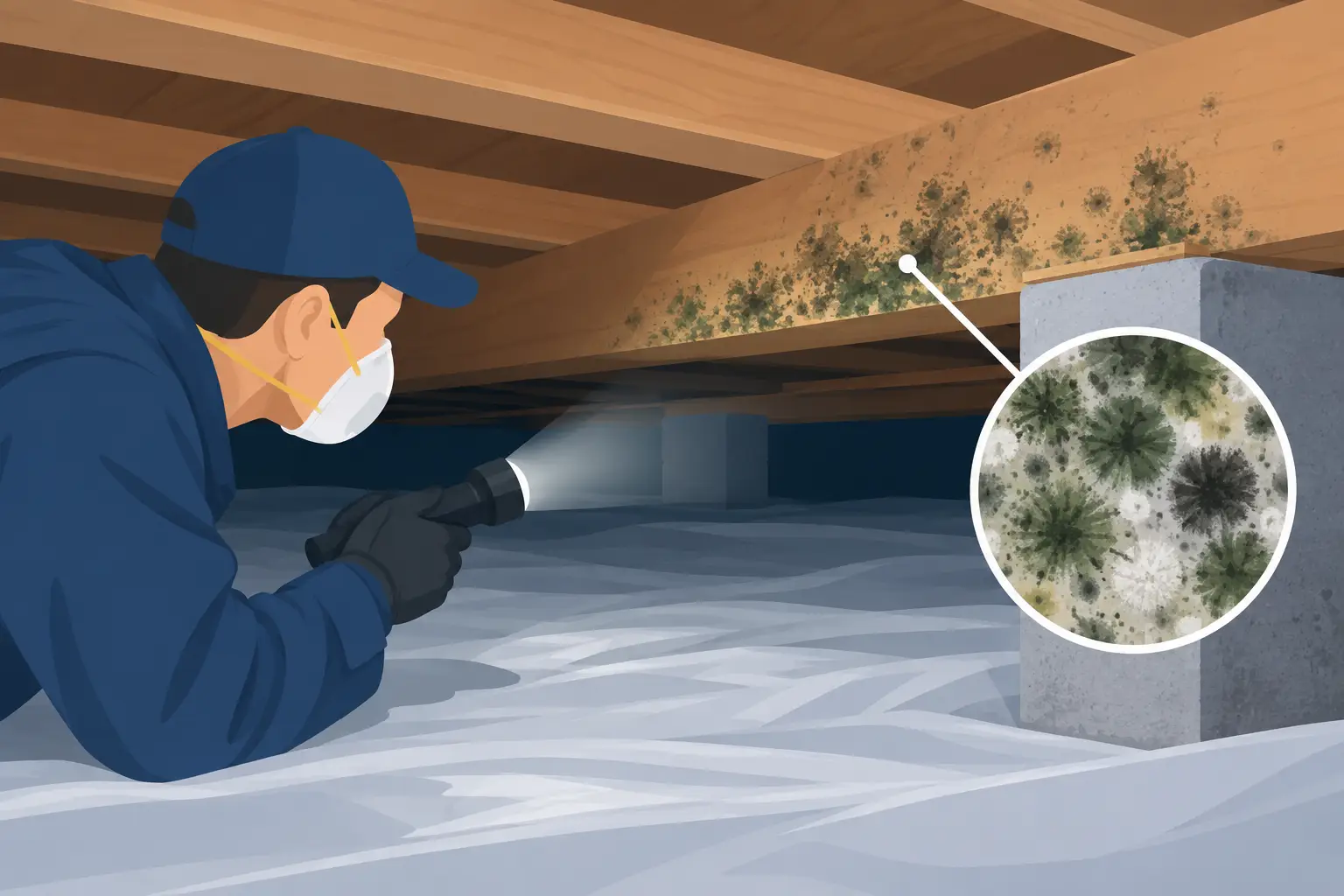
A musty odor is easy to dismiss during a showing, especially when a home otherwise appears well maintained. This mold contamination case study follows a common Pacific Northwest inspection scenario: a buyer noticed an odor near a hallway closet, while the seller believed the issue was simply an older crawlspace. The inspection showed why neither assumption was enough.
The property was not a disaster, and it did not require panic. It did require a clear look at moisture, materials, and conditions beneath the home before the buyer moved forward. That distinction matters. Mold is often a symptom of a building condition that needs correction, not a stand-alone problem that can be solved with a spray bottle or a fresh coat of paint.
The Initial Concern: Odor Without an Obvious Leak
The home was a single-story residence with a vented crawlspace, located in a damp, wooded setting similar to many properties around Bainbridge Island and Kitsap County. During the walkthrough, there were no obvious stains on the living room ceiling, no active plumbing leak under the kitchen sink, and no visible mold growth in the finished rooms.
Still, a noticeable earthy odor was present at the hallway closet and became stronger near an access panel leading to the crawlspace. The buyer asked a sensible question: was this normal for an older home, or evidence of a larger issue?
Age alone does not explain a persistent odor. Older homes may have original materials, less effective vapor control, or ventilation designs that no longer perform well. But an inspection should identify the conditions creating the odor and determine whether moisture has affected building materials.
Mold Contamination Case Study: What the Inspection Found
The crawlspace access was opened and the area was inspected using direct observation, a moisture meter, and thermal imaging where conditions allowed. The goal was not to diagnose a medical condition or guess at a species of mold. It was to document visible conditions, identify likely moisture sources, and recommend the appropriate next step.
Several findings worked together:
- The ground vapor barrier was incomplete and pulled back in several locations, leaving exposed soil.
- Insulation below the bathroom area was damp and sagging.
- Localized organic-looking growth was visible on portions of the floor framing and subfloor.
- A bathroom drain connection showed evidence of intermittent leakage rather than an active, steady drip.
- Exterior grading directed runoff toward the foundation near the affected side of the home.
None of these findings alone automatically tells the whole story. Together, they explained why the crawlspace remained damp enough to support microbial growth and why odor could travel into the living area through gaps around plumbing penetrations and the closet access panel.
Thermal imaging helped identify temperature differences near the bathroom and hallway floor, which supported the moisture-meter readings and directed closer inspection. A thermal camera does not see mold, and it does not replace a moisture meter or visual evaluation. It is a useful screening tool because wet materials can cool differently than surrounding dry materials. In this case, it helped narrow the search without opening finished surfaces unnecessarily.
Why the Visible Growth Was Not the Only Issue
A common mistake is focusing only on what can be seen on framing. Visible growth matters, but the building conditions that allowed it to develop are often the more expensive and important part of the repair.
Here, cleaning the affected wood without addressing the drain leak, exposed soil, and poor drainage would have left the home vulnerable to recurrence. The insulation also needed attention. Wet or compressed insulation does not perform as intended and can hold moisture against the subfloor.
The inspection therefore separated the issue into two categories: source correction and material remediation. The source correction involved plumbing repair, drainage improvements, and a properly installed vapor barrier. Material remediation involved evaluating the affected insulation and visible growth area with a qualified remediation professional.
When Mold Testing Adds Useful Evidence
Mold testing is not necessary in every situation. If there is extensive visible growth and a clear moisture source, the immediate priority is usually correcting moisture conditions and obtaining a remediation plan. Testing cannot make an obvious problem disappear, and a single air sample should not be treated as a pass-or-fail verdict on an entire house.
In this case, testing was useful because the buyer wanted additional information before the end of the inspection contingency. The odor was noticeable in the hallway, but no visible growth was found in the finished space. Targeted sampling could help compare indoor conditions with the crawlspace and exterior baseline, while documenting the concern for negotiation and repair planning.
Results should always be interpreted in context. Mold spores exist naturally in outdoor air, and levels can vary with weather, season, ventilation, and sampling location. A qualified inspector considers the laboratory report alongside the moisture conditions, visible evidence, building history, and occupant concerns.
For a buyer, that produces a more useful answer than simply hearing that a test was “positive” or “negative.” The practical question is whether the home has a moisture condition that requires repair, whether building materials may need professional cleaning or removal, and whether the scope of work should be defined before closing.
How the Finding Changed the Transaction
The buyer did not walk away immediately. Instead, the inspection report gave the buyer and agent a documented basis for requesting further evaluation and repairs. The seller arranged for a licensed plumbing repair, improved drainage at the affected foundation area, and replaced the missing sections of vapor barrier.
Because visible growth and damp insulation were present, the buyer also requested a remediation estimate from a qualified contractor. That estimate helped establish the remaining cost and scope rather than leaving both parties to negotiate based on an odor alone.
This is where timing matters. A detailed report delivered promptly can keep a real estate transaction moving while allowing enough time for the right specialists to assess their portions of the work. A general home inspection identifies concerns and their likely causes. Depending on findings, the next professional may be a plumber, drainage contractor, insulation contractor, or mold remediation company.
There are trade-offs. Sellers may prefer to offer a credit rather than complete work before closing. Buyers may prefer repairs with invoices and documentation. Neither option is always better. A credit can give the buyer control over the work, while completed repairs may reduce uncertainty before move-in. The right approach depends on the repair scope, the transaction timeline, and the confidence both parties have in the contractor’s proposed solution.
What Homeowners Can Learn From This Case
The most valuable lesson is that mold concerns should be investigated early, before they become a larger repair or a stalled transaction. Musty odors, recurring condensation, damp insulation, peeling paint near a bathroom, and stains that return after cleaning all deserve attention.
Crawlspaces are especially vulnerable because they are out of sight, difficult to access, and affected by several systems at once. Site drainage, plumbing leaks, foundation vents, vapor barriers, insulation, and bathroom exhaust all influence moisture levels below a home. On waterfront and heavily wooded properties, seasonal moisture and limited sun exposure can add to the challenge.
A careful inspection does not label every discoloration as hazardous mold, nor does it dismiss every odor as normal. It documents what is visible, checks for elevated moisture, uses tools where they add value, and explains what should happen next.
For homeowners planning to sell, addressing known drainage or plumbing issues before listing can prevent last-minute negotiations. For buyers, asking for a thorough review of crawlspaces, attics, bathrooms, and exterior drainage can provide far more clarity than relying on a quick visual walkthrough.
If a home has a persistent odor or suspected moisture issue, the most useful next step is to identify the source before deciding on cleanup. Clear evidence, a practical repair plan, and enough time to evaluate the work can turn an unsettling inspection finding into an informed decision.


Leave a Reply