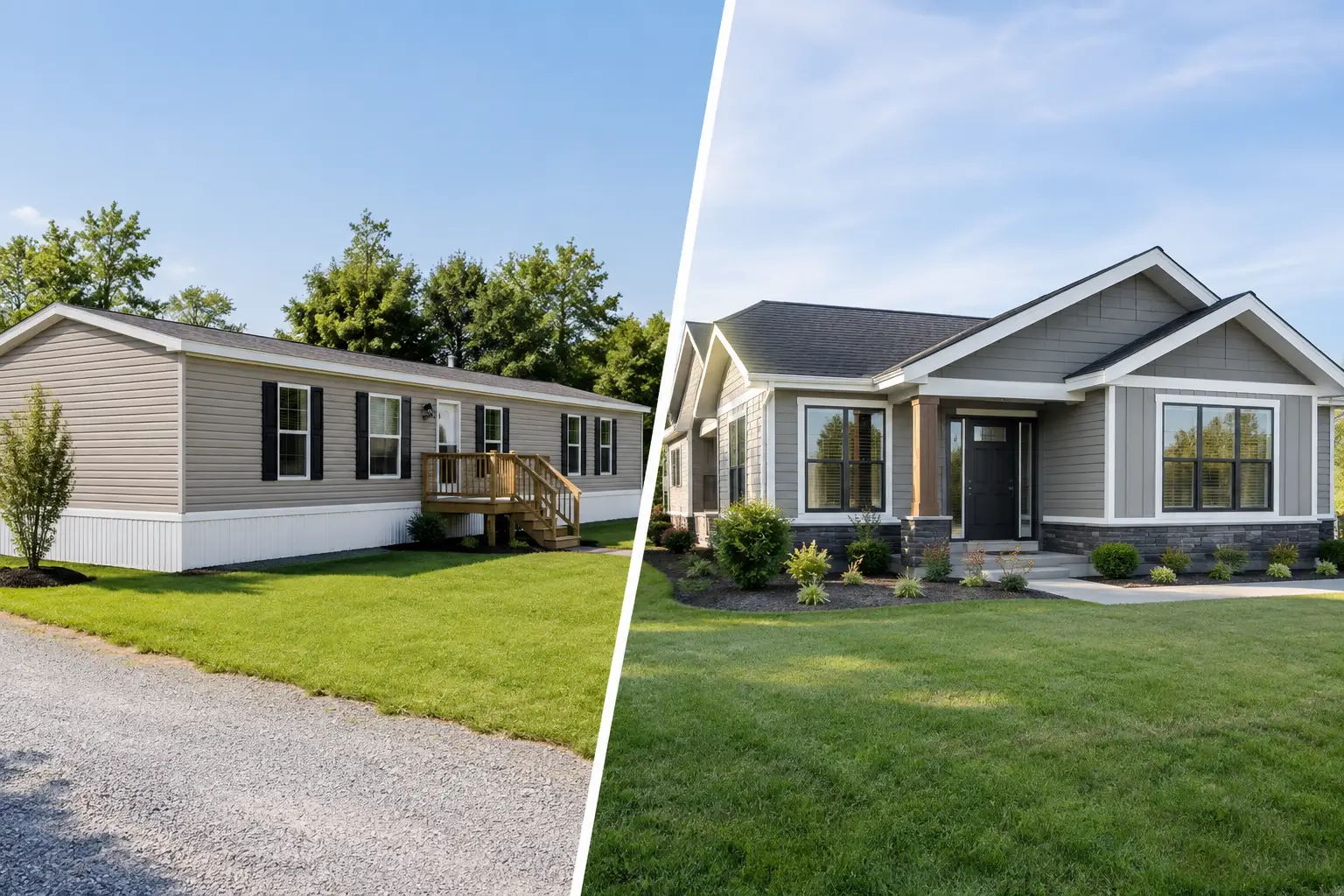
A manufactured home versus modular home comparison can sound like a question about appearance. In practice, the distinction affects the building code, foundation, financing options, appraisal process, insurance, and what an inspector needs to verify before closing. Two homes may look nearly identical from the street, yet the documents and site conditions behind them can be very different.
For buyers in Kitsap County and nearby Washington communities, getting the classification right early can prevent a frustrating surprise with a lender, insurer, or loan underwriter. It also helps buyers focus an inspection on the components that matter most for that specific property.
Manufactured Home Versus Modular Home: The Core Difference
A manufactured home is built in a factory under the federal HUD Code, formally known as the Manufactured Home Construction and Safety Standards. It is constructed on a permanent steel chassis and transported to the site, usually in one or more sections. Homes built on or after June 15, 1976, should carry HUD certification labels, commonly called HUD tags, on the exterior of each transportable section.
A modular home is also factory-built, but it is constructed to the same state and local building codes that apply to site-built homes at its final location. Its sections are transported to the lot, set on a permanent foundation, and assembled there. Once completed, a modular home is generally treated much like a conventional site-built house for permitting and appraisal purposes.
This does not mean one type is automatically better built than the other. Both can be well-designed, durable homes. The meaningful difference is the code under which the home was built, how it was transported and installed, and how it is documented for lending and ownership purposes.
Do Not Confuse a Manufactured Home With an Older Mobile Home
People often use the terms interchangeably, but they are not the same. A mobile home generally refers to a factory-built home constructed before the HUD Code took effect in 1976. These older homes may have different safety features, construction details, and financing limitations.
Age alone does not determine condition. A carefully maintained older home may be a reasonable purchase, while a newer home can still have significant defects. Still, the date of manufacture matters because it affects identification, code references, and the loan programs available.
How the Foundation Changes the Conversation
The steel chassis remains part of a manufactured home, even when the home has been placed on a permanent foundation and the skirting makes it less visible. The support system may include piers, pads, anchors, tie-downs, perimeter walls, and engineered connections. Proper installation is not cosmetic work. It helps the home resist settlement, wind forces, and movement.
A modular home is typically set on a conventional foundation, such as a crawlspace or basement foundation designed for that site. The modules are joined and completed according to approved plans and local inspection requirements. From an inspection standpoint, the foundation is evaluated much like the foundation beneath a site-built house, with attention to drainage, cracking, moisture, support conditions, and visible structural concerns.
For a manufactured home, a lender may require evidence that the home is permanently installed and properly attached to an acceptable foundation. FHA, VA, and certain conventional loan programs can have specific requirements. An engineer may need to evaluate or certify the foundation where required. A standard home inspection can identify visible concerns, but it does not replace an engineering certification or verify a foundation concealed behind finished materials.
Construction Quality Depends on More Than the Label
Factory construction offers practical advantages for both manufactured and modular homes. Building materials are typically stored out of the weather, measurements are repeated in a controlled setting, and production follows established plans. This can reduce some of the delays and moisture exposure associated with a long on-site build.
However, the factory is only part of the story. Transport, site preparation, foundation work, utility connections, roof and wall tie-ins, and finish repairs after delivery all affect the final result. A home can leave the factory in good condition and still develop issues from an uneven set, poor drainage, damaged siding, incomplete flashing, or improperly connected utilities.
That is why an inspection should look beyond whether the home appears clean and recently updated. Visible areas beneath the home, in the attic, around exterior penetrations, at roof transitions, and near plumbing connections can reveal conditions that deserve further evaluation.
Financing, Land, and Ownership Can Be Decisive
A modular home on owned land is often financed and appraised similarly to a site-built home. That can make the process more straightforward, though every lender has its own underwriting standards.
Manufactured-home financing varies more widely. The best options are often available when the home is permanently affixed to land that is included in the sale and classified as real property. If the home sits in a park on leased land, it may be treated as personal property rather than real estate. The buyer may need a different loan product, and resale options can be more limited.
Before making an offer, ask whether the land and home are conveyed together, whether title has been eliminated if applicable, and whether the property record clearly identifies the home. Buyers should also confirm the lender’s requirements before the inspection contingency expires. Waiting until the final week can create pressure when a missing HUD tag, incomplete foundation documentation, or park approval becomes an issue.
What to Check Before You Commit
A thorough property inspection is valuable for either type of home, but manufactured housing adds several targeted questions. Buyers and sellers should gather available documents early and confirm that the home’s identity matches the listing, county records, and lender file.
Pay particular attention to these items:
- HUD certification labels and the interior data plate, when present
- Visible foundation supports, anchoring, skirting, and access beneath the home
- Roof condition, including seams and transitions on multi-section homes
- Signs of moisture, plumbing leakage, wood-destroying insects, or damaged subflooring
- Electrical service, heating equipment, water supply, sewer or septic connections, and site drainage
Thermal imaging can help identify temperature differences consistent with moisture intrusion or missing insulation, but it is a screening tool rather than proof of a concealed defect. Similarly, a pest inspection can identify visible evidence of wood-destroying organisms, while areas blocked by insulation, finishes, stored belongings, or limited crawlspace access may remain inaccessible.
At Lavalyn Inspections, manufactured-home inspections are approached with the same careful attention given to any residential property: accessible roofing when safe, crawlspace and attic evaluation where access allows, thermal scanning of interior areas, and clear reporting on visible conditions. When a HUD/FHA or VA requirement applies, buyers should confirm exactly what documentation their lender needs rather than assuming every inspection report satisfies every certification request.
Resale Value Is Local and Property-Specific
It is tempting to assume modular homes always appreciate like site-built homes and manufactured homes do not. The reality is more detailed. Market value depends on location, land ownership, neighborhood demand, age, maintenance, foundation type, financing availability, and comparable sales.
On Bainbridge Island, in Kitsap County, and throughout the region, the underlying land value can be a major factor. A well-maintained manufactured home on owned land with a permanent installation may appeal to buyers seeking a more attainable entry point. A home in a leased-land community may offer a lower initial purchase price but introduce monthly space rent and different buyer financing options.
Condition remains central to resale. Deferred roof maintenance, soft flooring near bathrooms, water damage below windows, aging electrical components, or inadequate drainage can affect negotiations regardless of how the home was built.
Choose the Home That Fits the Transaction
A modular home may make sense for a buyer who wants a factory-built home that is generally integrated into local permitting and conventional real-estate financing. A manufactured home may be an excellent fit when cost, speed of placement, location, and land arrangement align with the buyer’s goals. Neither label removes the need for careful due diligence.
Before you move forward, confirm the home type, ownership structure, installation records, loan requirements, and visible condition. The most useful inspection is not simply a list of defects. It gives you clear evidence to decide what to negotiate, what to repair, and whether the property supports the investment you are about to make.


Leave a Reply