
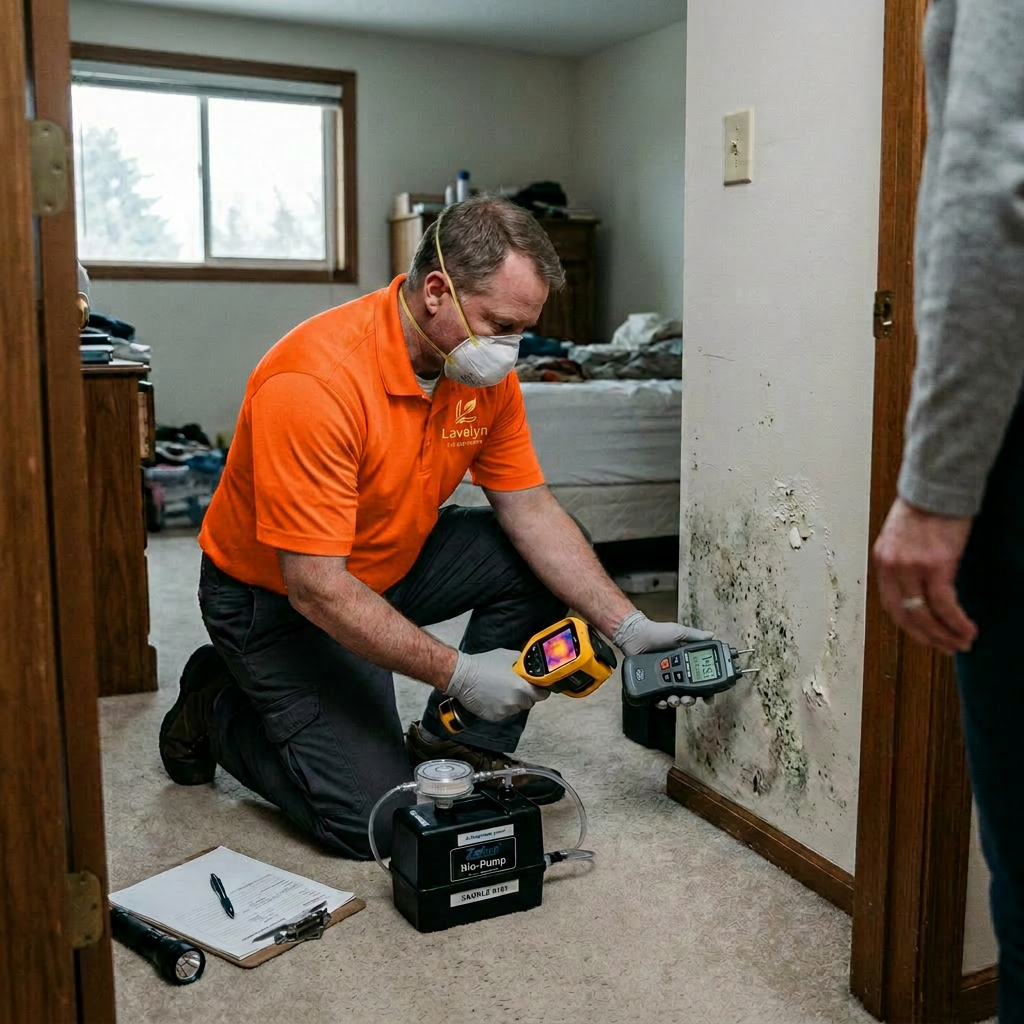

If you have noticed a musty odor, water damage, or suspicious growth in your home, you may be wondering whether you need mold testing. The right answer depends on what you can already see, how extensive the moisture problem is, and whether mold may be hidden behind walls, under flooring, or inside ventilation systems.
A professional mold assessment can help you understand the situation and choose sensible next steps. It should not be used to create unnecessary alarm or to replace proper moisture control. The goal is to identify the source of the problem, document affected areas, and help you decide what needs to happen next.
What is mold testing?
Mold testing usually refers to collecting samples from the air, surfaces, or materials in a building and sending them for analysis. Depending on the situation, a professional may also perform a detailed visual inspection and use moisture-detection equipment to look for conditions that support mold growth.
Testing is only one part of a complete assessment. A useful evaluation considers the building’s history, visible conditions, moisture sources, ventilation, and areas where mold could be concealed.
When should you consider mold testing?
You notice a persistent musty odor
A strong musty smell may suggest excess moisture or hidden microbial growth, particularly when the odor continues after cleaning and ventilation. Odor alone cannot identify the location or extent of a problem, but it is a reason to investigate further.
Your home has experienced water damage
Leaks, flooding, plumbing failures, roof damage, and condensation can create conditions where mold grows. Pay close attention to areas affected by water, including drywall, ceilings, carpeting, cabinets, crawl spaces, and insulation.
Mold keeps coming back
If visible growth returns after cleaning, the underlying moisture source may still be present. Repeated growth can point to an unresolved leak, elevated humidity, condensation, or hidden damp materials.
You suspect hidden mold
Mold may be concealed behind drywall, beneath flooring, inside wall cavities, around pipes, under sinks, or near heating and cooling equipment. Signs such as staining, peeling materials, warped surfaces, or a localized odor may justify a closer inspection.
You are buying or selling a home
A mold assessment may be helpful when there is a history of water damage, an unresolved odor, visible growth, or concern about a previous remediation project. Testing should be selected based on the property’s condition and the question you need answered.
You want to document conditions before or after remediation
Sampling may sometimes help document conditions before work begins or evaluate whether a specific area was adequately cleaned. The most useful approach depends on the size of the affected area and the scope of the remediation.
Do you always need a mold test?
No. If mold is clearly visible, testing may not be necessary to confirm that mold is present. In many situations, the priority is to stop the moisture source, remove affected materials safely, and prevent the problem from returning.
Mold test results also do not provide a universal pass-or-fail answer for a home. There are no broadly accepted federal health limits for indoor mold or mold spores, so a test should be connected to a specific question.
- Is there evidence of hidden moisture or mold?
- Is a particular area affected?
- Could the HVAC system or another building component be involved?
- Has a remediated area been cleaned as intended?
A responsible professional should explain what a proposed test can and cannot tell you before collecting a sample.
What happens during a professional mold assessment?
The exact process varies by property, but a thorough assessment may include discussing the property’s history, a visual inspection, a moisture assessment, targeted sampling when appropriate, and laboratory analysis with reporting.
How should you prepare for mold testing?
Before the appointment, make a short list of relevant details, including when you first noticed the odor or growth, any leaks or flooding, areas that have been cleaned or repaired, and recent HVAC, roof, or foundation work.
Avoid disturbing suspected mold immediately before an inspection. Do not paint over it, seal it behind new materials, or remove large sections of drywall without understanding the source of the moisture and the appropriate safety precautions.
What should you do after testing?
A test result is not the end of the process. Repair leaks, improve drainage, address condensation, control indoor humidity, and plan remediation based on the size and location of the problem.
Use caution around health concerns
Damp or moldy environments can affect people differently. If you are concerned about symptoms, speak with a qualified healthcare professional.
Common mold-testing mistakes to avoid
- Relying only on a home test kit
- Treating a single sample as a full-home diagnosis
- Focusing on mold type instead of the moisture source
- Cleaning without investigating why mold returned
- Waiting too long after water damage
The bottom line
Mold testing can be useful when you need answers about hidden moisture, a recurring problem, a questionable area, or conditions before or after remediation. It is not always necessary when mold is already visible, and no test can replace fixing the moisture source.
If you are dealing with a musty odor, water damage, recurring growth, or suspected hidden mold, contact the mold-testing team through the website to discuss your situation and schedule an assessment.
Important note: This article is for general educational purposes and is not medical, legal, or remediation advice. Building conditions and health concerns should be evaluated by appropriately qualified professionals.