
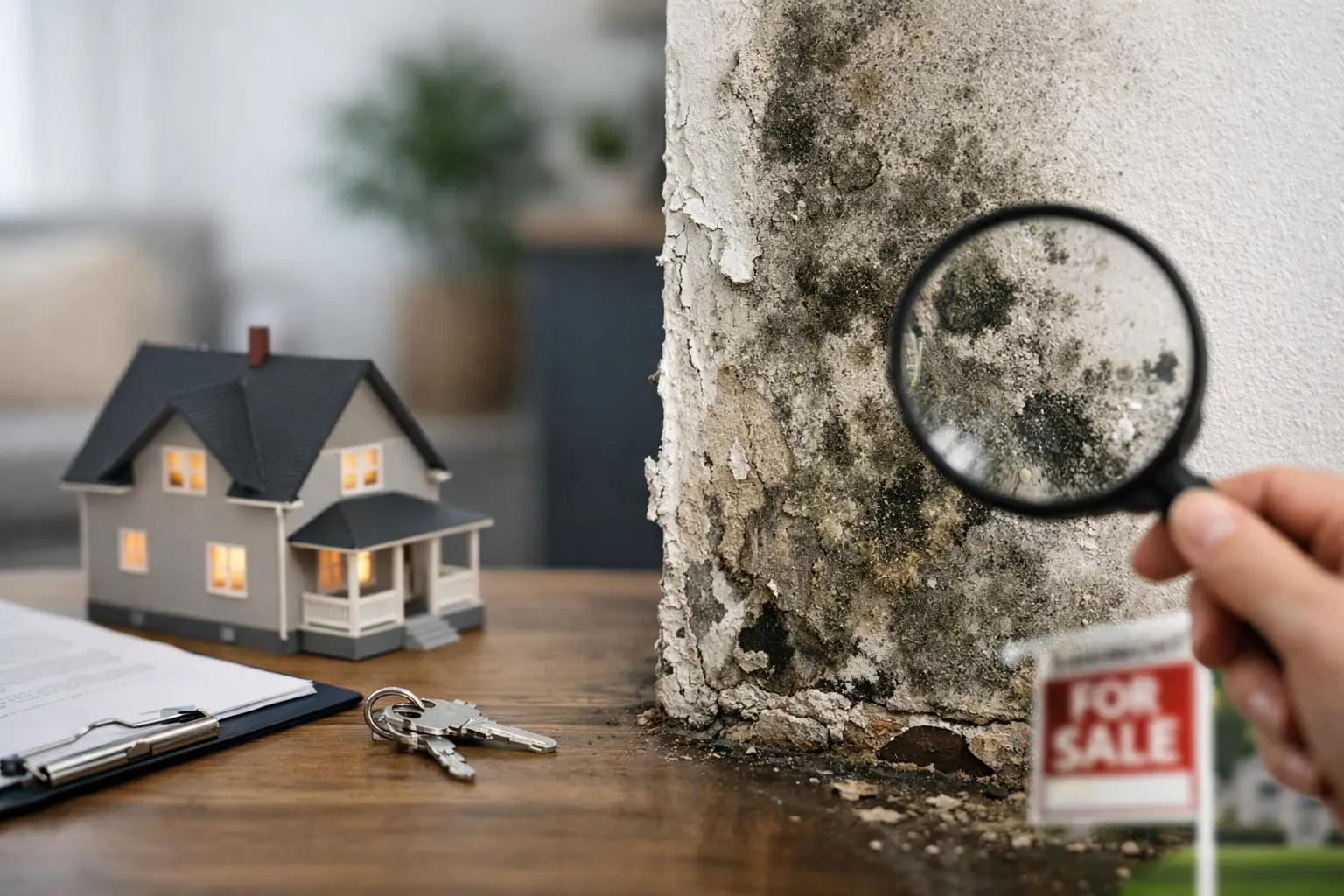
A small dark spot beneath a bathroom vanity can turn into a much larger transaction issue when a buyer starts asking why it is there, how long it has been there, and whether moisture is still present. Can mold affect a home sale? Yes. The effect may range from a straightforward repair request to delayed closing, a price adjustment, or a buyer walking away. The deciding factor is rarely mold alone. It is the condition behind it and the quality of the evidence available to explain and resolve it.
How Mold Can Affect a Home Sale
Mold is a visible symptom, not usually the full diagnosis. It needs moisture and a suitable surface to grow, so buyers and inspectors will look beyond the staining or odor to identify the water source. A leaking supply line, failed shower surround, roof leak, poor bathroom ventilation, wet crawlspace, or condensation in an attic can each create a very different repair scope.
A limited area of surface growth caused by an old, repaired plumbing leak may be manageable. A musty crawlspace with wet insulation, decayed framing, and high moisture readings creates a different level of concern. Buyers are not only evaluating cleanup costs. They are evaluating the possibility of concealed damage, future maintenance, indoor air quality concerns, and whether they can trust the rest of the property’s condition.
This is why an unresolved mold issue can affect sale price even when the visible area is small. Uncertainty has a cost in real estate. When a buyer cannot determine the source, extent, or remedy, they may budget for the worst case.
What Buyers and Lenders May React To
Most buyers expect a home inspection to identify visible mold-like growth, water staining, elevated moisture, damaged materials, and conditions that may support microbial growth. An inspector does not diagnose a medical condition, but a thorough inspection can document observable conditions and help direct the next step.
The biggest red flags tend to be active moisture, a persistent musty odor, visible growth in more than one area, prior repairs with no explanation, and materials that remain damp. In the Pacific Northwest, crawlspaces, attics, bathrooms, laundry areas, and walls near exterior cladding deserve particular attention because seasonal moisture can be persistent rather than obvious.
A lender does not automatically reject a loan because mold is present. However, a significant condition may trigger repair discussions, appraisal concerns, insurance questions, or loan program requirements. FHA and VA transactions can involve additional property-condition standards, and manufactured homes may have their own compliance considerations. Sellers should not assume a cosmetic patch will satisfy an appraiser, lender, or a careful buyer.
The Source Matters More Than the Stain
Before listing, the most useful question is not, “How do I hide this?” It is, “Why did this happen, and is it still happening?” Painting over staining, spraying fragrance, or replacing a small piece of drywall without correcting the water source can create a more difficult negotiation later. Fresh paint over a moisture-damaged area often draws closer scrutiny when there is still an odor, staining nearby, or a high moisture reading.
A practical assessment should establish whether moisture is active and where it is traveling. Thermal imaging can help identify temperature differences that are consistent with moisture conditions behind finished surfaces, although it does not see through walls or confirm mold by itself. Moisture meters, visual inspection, attic and crawlspace access, and a review of plumbing and exterior drainage all help build a clearer picture.
When mold is suspected but not readily visible, certified mold testing may be appropriate. Testing can be useful when there is a persistent odor, a history of water intrusion, disagreement about the extent of a concern, or a need for baseline information before and after remediation. It is not a substitute for finding and correcting the moisture source.
When Remediation Is the Better Choice
Professional remediation is often the sensible path when growth is widespread, materials are damaged, the affected area is difficult to access, or occupants have health concerns. A qualified remediation contractor can contain the work area, remove affected porous materials when needed, clean appropriate surfaces, and address conditions identified in the remediation plan.
For a small, isolated issue caused by a known and repaired source, the work may be simpler. Even then, keep records. Before-and-after photographs, invoices, plumber reports, receipts for repairs, and any post-remediation testing provide useful context when buyers ask questions. Documentation does not make a defect disappear, but it replaces speculation with facts.
Disclosure Is Part of Protecting the Sale
Sellers should answer property disclosure questions accurately and consult their real estate professional or legal advisor when they are unsure how a known condition applies. In Washington, disclosure obligations and transaction forms matter, especially when a seller knows about water intrusion, repairs, or mold-related conditions. Trying to avoid the subject can become more damaging than the original issue if it appears that a condition was concealed.
Clear disclosure gives a seller the opportunity to explain what happened and what was done. For example, a buyer may view “past washing machine leak, supply line replaced, damaged flooring removed, area dried and repaired, invoices available” very differently from unexplained new flooring next to a musty laundry wall.
The right approach depends on the situation. Some sellers choose to investigate and repair before listing, which can make the property easier to market and reduce last-minute negotiations. Others disclose the condition and price the home accordingly. A third option is to obtain inspections and estimates before listing, then decide whether repairs or a credit make more sense. There is no single answer, but waiting until the buyer’s inspection period offers the least control.
A Smart Pre-Listing Plan for Suspected Mold
Sellers who suspect a moisture or mold issue benefit from an early, evidence-based process. Start by identifying visible signs: staining, peeling finishes, warped materials, condensation, odors, or damaged insulation. Consider the home’s history, including roof leaks, plumbing failures, flooding, drainage problems, and prior remediation.
Next, have the area evaluated so the scope is based on conditions rather than guesses. A detailed pre-listing inspection can examine the roof, exterior, plumbing fixtures, attic, crawlspace, ventilation, and accessible structural materials that may relate to moisture. Lavalyn Inspections uses thermal cameras as part of a thorough inspection process to help identify moisture signatures that warrant closer review, with reports delivered the same day or within 24 hours.
Then correct the cause before cosmetic repairs begin. That may mean repairing a leak, improving site drainage, venting a bathroom fan to the exterior, replacing damaged flashing, or addressing crawlspace moisture. After the area is dry and the needed repairs or remediation are complete, organize the records in one place for your agent and prospective buyers.
What Buyers Should Ask When Mold Appears in an Inspection Report
Buyers should resist both extremes: assuming every reference to mold means the home is unsafe, or dismissing it as a minor cleaning issue. Ask whether the inspector observed active moisture, what materials appear affected, whether the likely source is visible, and whether further evaluation is recommended.
It is also reasonable to ask for repair documentation, prior inspection reports, invoices, and information about any known water events. If the concern is in a crawlspace, attic, or concealed wall area, a specialist may need to evaluate further before the inspection contingency expires. The goal is a repair decision based on scope and evidence, not fear.
A buyer may negotiate for repairs, a credit, a price change, or the ability to cancel under applicable contingency terms. The best choice depends on the condition, the contract, the buyer’s tolerance for managing repairs, and whether the seller can provide convincing documentation. For a substantial issue, an estimate alone may not reveal the full scope until materials are opened.
Do Not Let a Small Clue Become a Late Surprise
Mold does not automatically stop a sale, and a home with a properly repaired moisture issue can still sell successfully. What disrupts transactions is a condition that is discovered late, poorly understood, or handled without records. Early investigation gives sellers time to repair correctly, disclose confidently, and set realistic expectations. It gives buyers a clearer basis for deciding whether the home is still the right investment.
If you notice an odor, staining, or damp materials before listing, treat it as useful information rather than an inconvenience. Getting a clear answer while you still control the timeline is usually the most practical way to protect your sale and the people moving into the home.