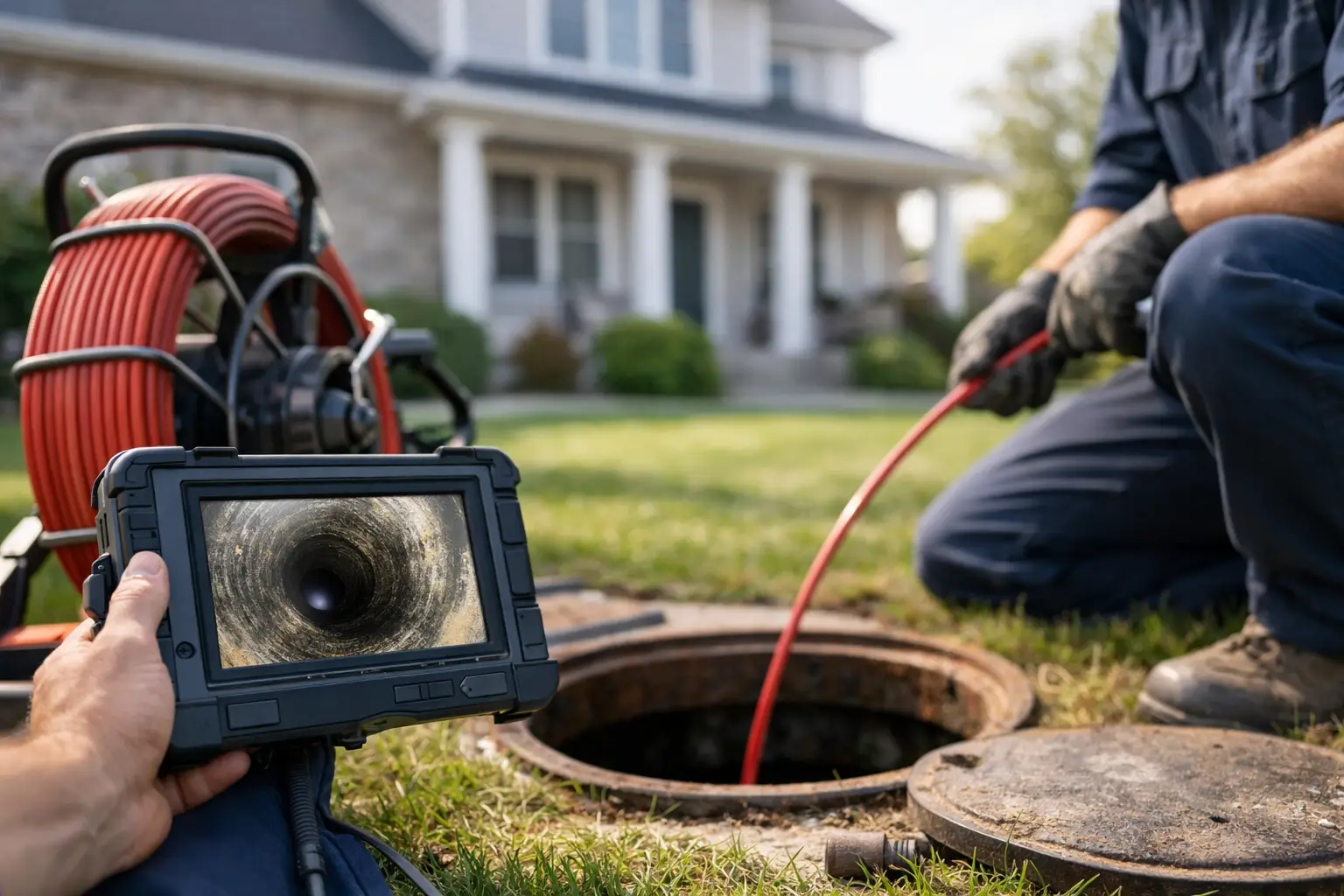
A sewer camera inspection before buying a house can expose a problem that no walkthrough, sink test, or standard visual inspection can fully confirm: the condition of the buried pipe carrying wastewater away from the home. A house can look well maintained above ground while the sewer line below the yard is cracked, obstructed, sagging, or nearing the end of its service life.
For a buyer, that information can change the conversation before closing. Sewer repairs range from a straightforward cleaning to excavation, pipe lining, or replacement. Knowing which situation you may be inheriting gives you time to request repairs, negotiate a credit, plan the work, or reconsider the purchase with clear evidence rather than a surprise backup after move-in.
Why the Sewer Line Deserves Its Own Inspection
A general home inspection evaluates visible and readily accessible plumbing components, including fixtures, drains, water supply piping where visible, and the home’s overall plumbing condition. The main sewer lateral is different. It is usually underground, and much of its length cannot be evaluated from inside the home.
A camera inspection sends a flexible, waterproof camera through an accessible cleanout or other suitable entry point. The camera provides real-time video of the pipe interior, allowing the inspector to document its material, general condition, obstructions, joints, and visible defects. It is a practical way to evaluate a major system that otherwise remains out of sight.
This service is especially worth considering when a home is older, has mature trees near the likely sewer route, has a history of drain backups, or has been vacant for a period of time. It can also be valuable for newer homes. New construction is not automatically free of drainage issues, and installation defects, construction debris, or poor grading can affect a line at any age.
In Bainbridge Island, Kitsap County, and surrounding areas, homes vary widely in age, construction style, terrain, and connection type. A property may connect to a public sewer system or rely on a septic system. The right inspection approach depends on that distinction.
What a Sewer Camera Inspection Can Find
The camera does not merely confirm that water is moving at that moment. It helps identify why a line may be vulnerable to future trouble. Common findings include root intrusion, cracked or separated pipe sections, offset joints, corrosion, deteriorated older pipe materials, bellies in the line where waste can collect, and blockages from wipes, grease, debris, or damaged pipe walls.
Root intrusion is one of the more common concerns in established neighborhoods. Tree roots naturally seek moisture and can enter through small gaps at pipe joints. A line may still drain during the inspection, yet roots visible on camera can indicate a maintenance need or an issue that will worsen without cleaning and repair.
A belly is another finding buyers should understand. This is a low section of pipe that holds water or debris instead of maintaining a consistent slope. A minor amount of standing water does not always mean the line needs immediate replacement. The location, depth, amount of retained material, pipe condition, and frequency of drainage symptoms all matter. The video creates a starting point for a qualified sewer contractor to advise on the appropriate repair.
Camera imaging can also help identify the pipe material. Older lines may be made of clay tile, cast iron, Orangeburg, or other materials with different failure patterns and expected service lives. Material alone is not a verdict. A well-performing older line may be serviceable, while a newer line with poor installation can need attention. Condition is what matters most.
What Happens During the Inspection
A sewer camera inspection is generally a focused, non-destructive service. The inspector first looks for an accessible cleanout, typically located outside the home or in a utility area. The camera is then advanced through the line while video is monitored and key observations are documented.
The process may not always provide a complete view from the house to the public connection or septic tank. Access, active blockages, pipe configuration, standing water, and the location of cleanouts can limit how far the camera travels. If the line is severely blocked, cleaning may be needed before the camera can evaluate the pipe beyond that point.
A careful report should explain what was observed, where the camera was able to travel, and any limitations. If significant defects are found, the next step is usually evaluation by a licensed plumbing or sewer contractor. That contractor can locate the issue, determine depth and repair options, and provide a repair estimate. The inspection identifies and documents concern areas; it does not replace the contractor’s scope of work or repair design.
When to Schedule a Sewer Camera Inspection Before Buying a House
The best time is during the inspection contingency period, early enough to leave room for follow-up. If the camera reveals a concern, buyers may need time to obtain a contractor’s opinion, review estimates, and discuss next steps with their agent and seller.
Ideally, schedule the sewer scope with the general home inspection or shortly afterward. Coordinating services can make the due-diligence process more efficient and keeps the sewer findings connected to the broader condition of the property. For example, slow drains inside the home, moisture staining in a crawlspace, or evidence of past plumbing repairs may add context to what the sewer camera shows.
Do not wait for a drain backup to make this part of the decision. By then, the transaction timeline may be tight and the buyer may have fewer practical options. A modest inspection cost before closing can be far easier to manage than an unexpected repair after ownership transfers.
Public Sewer and Septic Systems Need Different Questions
If the home is connected to a municipal sewer, the camera inspection typically focuses on the private lateral from the house toward the public system. Responsibility for repair can vary by jurisdiction and by the location of the defect, so buyers should verify where private responsibility ends and utility responsibility begins.
If the home has a septic system, camera imaging may still be useful for evaluating the building sewer pipe leading from the home to the tank. It is not, however, a substitute for a septic inspection. A complete septic evaluation may include locating and opening the tank, assessing tank condition, reviewing pumping history, evaluating the drainfield where appropriate, and confirming system records or permits. Buyers should order the service that matches the property’s actual wastewater system.
How to Use the Findings During a Purchase
Not every sewer finding should end a purchase, and not every clear camera video guarantees years of trouble-free service. The goal is to make a decision with better information. A small root intrusion might support a request for routine cleaning and future maintenance. A broken, offset, or collapsed section may justify a contractor evaluation and a more substantial repair discussion.
When reviewing findings, ask practical questions. Is the line currently functioning? Is the problem isolated or present in several areas? Can the issue be cleaned, repaired locally, lined, or does it require replacement? Has a qualified contractor estimated the work? Those answers help separate a manageable maintenance item from a significant budget concern.
Keep the camera video and written report with your transaction documents. They provide useful baseline information for a contractor, future maintenance planning, and eventual resale disclosures. If repairs are completed before closing, request invoices, warranties, permits if applicable, and any post-repair video documentation.
A Small Step With Meaningful Leverage
A sewer line is easy to overlook because it is buried, quiet, and largely invisible when it works. That is precisely why a targeted inspection can be so valuable. It replaces assumptions with footage and gives buyers a clearer view of one of the home’s most expensive-to-access systems.
Lavalyn Inspections uses sewer camera imaging as part of a detail-focused approach to helping clients understand the property they are considering, not simply the condition that is visible during a showing. If a line needs attention, it is better to learn that while you still have choices. A clear camera view before closing can help you move forward with confidence, a repair plan, or the information needed to make a different decision.


Leave a Reply