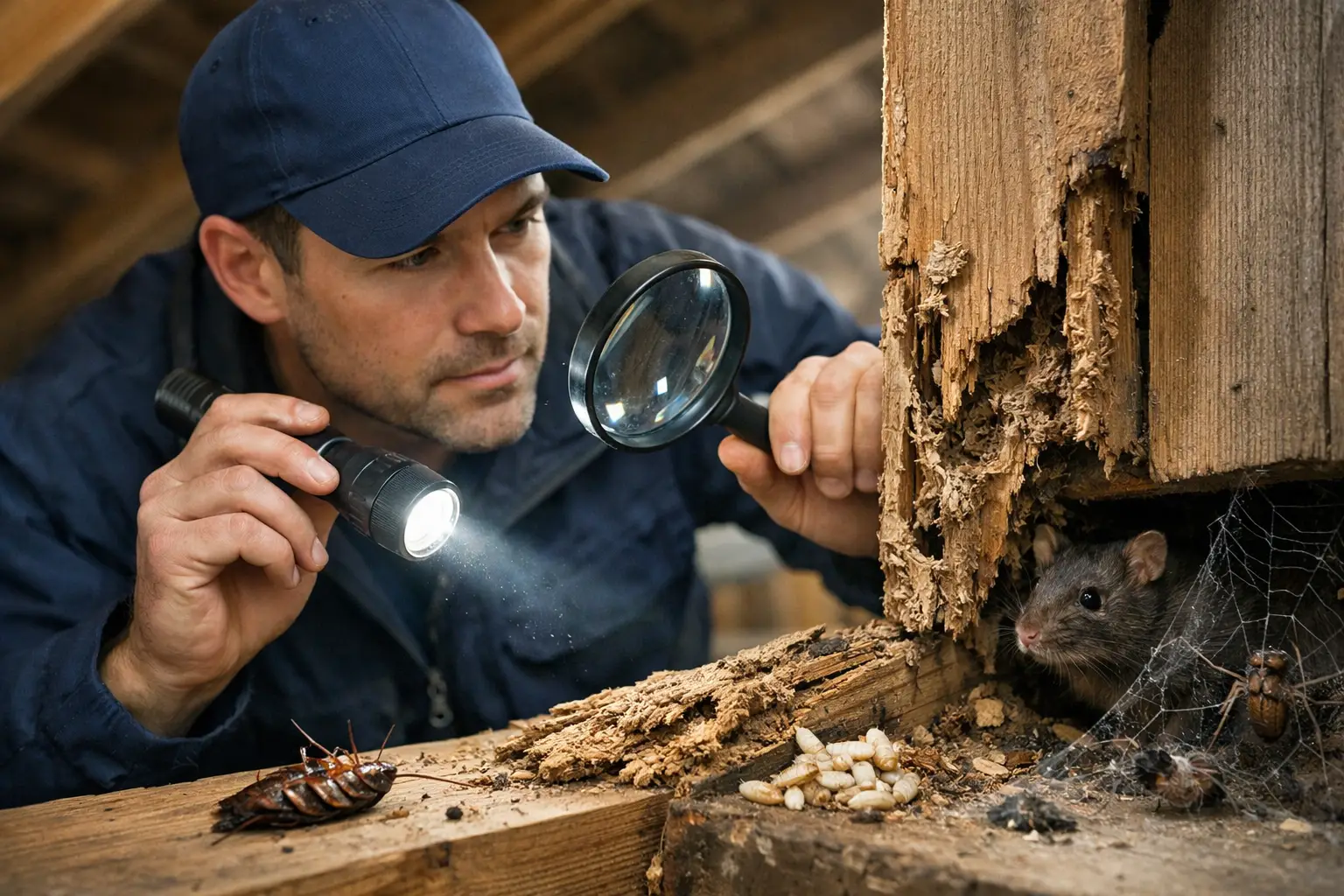
A soft spot at a deck post, a line of mud on a foundation wall, or pin-sized holes beneath a windowsill can change the direction of a real estate transaction. A structural pest inspection is designed to identify visible evidence of wood-destroying organisms and the moisture conditions that allow damage to continue. For buyers, sellers, and homeowners, it provides a focused answer to a costly question: Is the home’s wood structure at risk?
In Western Washington, moisture is often part of the story. Rain, shaded lots, damp crawlspaces, plumbing leaks, and poorly managed drainage can create favorable conditions long before damage becomes obvious from inside the home. A proper inspection looks beyond surface appearance to help you understand what is visible, what may need further evaluation, and what should be addressed next.
What a Structural Pest Inspection Covers
A structural pest inspection is a visual examination of accessible areas where wood-destroying organisms may be present or may have caused damage. The inspector evaluates the home’s structural and exterior wood components, with close attention to areas that collect moisture or sit near soil.
The inspection commonly includes accessible portions of the crawlspace, basement, foundation perimeter, attic, garage, decks, porches, siding, trim, window and door areas, and other exposed structural elements. The goal is not simply to find an insect. It is to document signs of activity, damage, and conditions that increase the chance of a future problem.
Common findings can include evidence associated with carpenter ants, termites, wood-boring beetles, and wood-decay fungi. Each has a different pattern and repair implication. Carpenter ants, for example, usually take advantage of wood already softened by moisture. Termites can damage wood while remaining largely hidden. Wood-boring beetles may leave small exit holes and fine powdery material, though identifying the exact insect and whether activity is current can require closer evaluation.
A structural pest inspection is different from a general home inspection, even when both services are performed during the same appointment. A home inspection reviews the overall condition and major systems of the property. The pest inspection concentrates on visible evidence of wood-destroying organisms and conducive conditions. Both perspectives matter because a leaking roof, failed flashing, wet crawlspace, or poor grading may be the underlying cause of pest-related deterioration.
What Inspectors Look for During a Structural Pest Inspection
Wood-destroying organisms often leave clues before they leave an obvious failure. Inspectors look for damaged or hollow-sounding wood, galleries or tunnels, insect exit holes, discarded wings, frass or insect debris, mud tubes, fungal growth, and decay. They also look for the conditions that make those findings more likely.
Moisture and wood-to-soil contact
Moisture is one of the most significant risk factors in Kitsap and King County homes. A crawlspace with standing water, wet insulation, plumbing drips, inadequate ventilation, or poor drainage can support fungal decay and attract certain insects. Exterior grading that directs water toward the foundation can create the same concern.
Wood that touches soil is another frequent issue. Deck framing, siding, posts, trim, and steps should be properly separated from the ground where practical. Soil contact gives insects a concealed path to wood and exposes building materials to persistent moisture. The correction may be as simple as removing soil or vegetation, but the extent of any concealed damage still needs to be considered.
Vulnerable exterior details
Window trim, door frames, roof edges, siding transitions, deck connections, and areas around chimneys or penetrations are common locations for water intrusion. Paint can hide deterioration for a time, so the inspector pays attention to staining, soft wood, open joints, missing sealant, and gaps that let water enter.
On Bainbridge Island and throughout the Puget Sound region, shaded sides of a house can stay damp for extended periods. Moss and dense landscaping do not automatically mean there is structural damage, but they can hold moisture against siding, obstruct drainage, and make routine maintenance harder. Context matters. A single weathered board is different from widespread decay at wall framing, deck supports, or structural posts.
Crawlspaces and concealed-risk areas
The crawlspace is often where a pest inspection delivers its greatest value. It can reveal wet soil, damaged support posts, fungal growth on framing, pest tubes along foundation walls, and debris that hides evidence of activity. Limited clearance, insulation, stored materials, or standing water can restrict access, and those limitations should be documented in the report.
No visual inspection can see through finished walls, flooring, insulation, or inaccessible framing. That does not make the inspection less useful. It means the report should clearly distinguish between observed conditions, inaccessible areas, and recommendations for further investigation when the visible evidence warrants it.
Active Damage, Old Damage, and Conditions That Need Repair
One of the most useful parts of a pest inspection is separating a current concern from a past event. Older insect damage may remain visible years after treatment. Likewise, dry, inactive wood decay may be present where a leak was corrected long ago. The important question is whether the cause has been resolved and whether the remaining wood still performs its structural job.
An inspector may identify evidence that appears active, evidence that appears inactive, or findings where activity cannot be confirmed through a visual examination alone. When treatment is appropriate, a licensed pest-control professional can recommend a treatment plan. When structural repairs are needed, a qualified contractor or structural professional may need to determine the scope of repair.
Do not assume every finding requires immediate major work. Minor localized deterioration may be manageable with timely repairs and improved moisture control. On the other hand, damage at beams, rim joists, deck attachments, sill plates, or support posts deserves prompt attention because those components carry loads or affect safety.
Why Buyers, Sellers, and Homeowners Need Different Answers
For a buyer, the inspection helps turn a vague concern into documented information before the contingency period closes. It can support repair negotiations, help prioritize contractor bids, and prevent a surprise after move-in. The strongest reports explain where the finding is located, what evidence was observed, and why the recommended next step is appropriate.
For a seller, a pre-listing structural pest inspection can reduce last-minute disruption. If the report identifies moisture conditions or damaged exterior wood, the seller has time to obtain repairs, retain documentation, and present the property more confidently. Pre-listing work is not always necessary, but it can be valuable for older homes, properties with crawlspace concerns, or houses with visible exterior deterioration.
For a homeowner, the inspection is a maintenance tool. You may not be planning to sell, yet an annual look at drainage, deck components, siding clearance, plumbing leaks, and crawlspace moisture can catch small issues before they become expensive repairs. Regular attention is especially worthwhile after a roof leak, plumbing failure, drainage change, or extended period of standing water near the home.
How to Use the Report After the Inspection
A useful report should give you more than a pass-or-fail label. Read the findings in order of urgency and distinguish between treatment, moisture correction, and structural repair. These are related, but they are not the same task.
If insects are active, treatment may be the first priority. If moisture is feeding decay, the water source must be corrected or repair work may not last. If structural components are weakened, repairs should be evaluated based on location, extent, and load-bearing function. A clear report helps the right professional address the right problem rather than applying a temporary cosmetic fix.
Lavalyn Inspections approaches these findings as part of the property’s larger condition. Moisture signatures, roof details, drainage patterns, plumbing concerns, and crawlspace conditions can all help explain why wood damage developed. That broader context is valuable when you are deciding whether a repair is isolated or part of a larger maintenance issue.
When to Schedule a Structural Pest Inspection
A dedicated inspection makes sense during a purchase, before listing, or whenever you see signs such as soft exterior wood, insect debris, sagging deck components, unexplained staining, mud tubes, recurring moisture, or a musty crawlspace odor. It is also worth considering when a general home inspection identifies suspected damage but cannot determine the full extent or whether wood-destroying organisms are involved.
The best time to act is when the evidence is small and access is still possible. Clearing stored items from a crawlspace, trimming vegetation away from siding, and correcting drainage can make an inspection more complete and can prevent the conditions pests rely on. A well-documented inspection gives you a practical starting point: protect the wood, control the moisture, and make repairs based on evidence rather than guesswork.


Leave a Reply