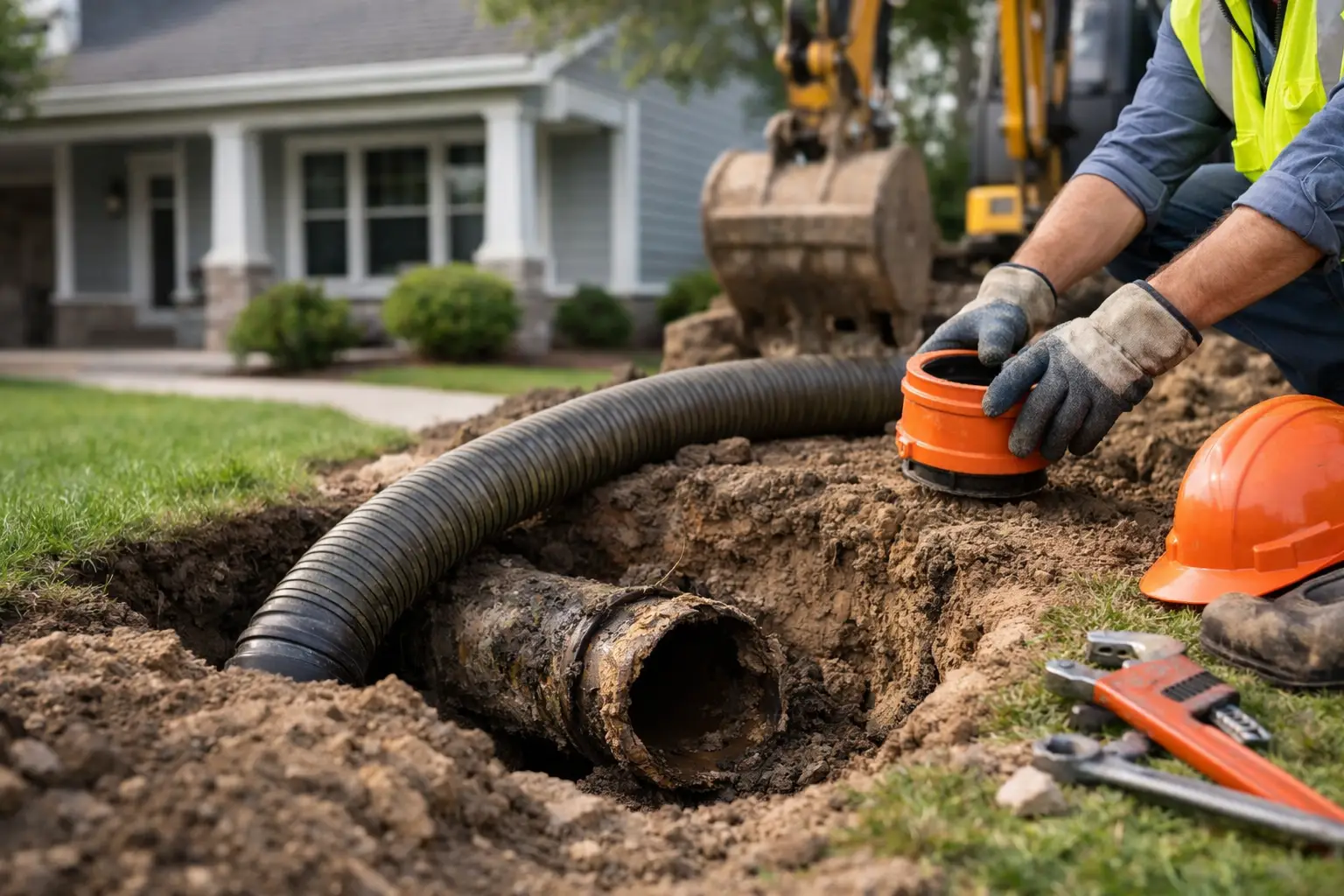
A sewer backup rarely arrives at a convenient time. One day, drains are slow. The next, a toilet gurgles, wastewater appears in a tub, or a buyer’s sewer scope report identifies a damaged line before closing. So, who pays sewer repairs? In most cases, the answer depends on where the problem is located, who owns that section of pipe, and what agreements or insurance coverage apply.
For many homeowners, the costly surprise is that the public sewer system may be nearby, but the pipe connecting the home to it is often private property. A sewer camera inspection can identify the location and condition of the problem before anyone starts digging – and before assumptions turn into expensive decisions.
Who Pays Sewer Repairs on a Typical Property?
A home connected to public sewer generally has two parts to its wastewater system. The municipal utility owns and maintains the public main, usually located in the street or within a public utility easement. The homeowner is commonly responsible for the private sewer lateral, the pipe that runs from the home to the public main.
That general rule sounds simple, but the boundary is not always at the curb. In some communities, the utility maintains the connection point at the main. In others, the property owner may be responsible for the lateral all the way to the main, including pipe under a sidewalk or street. Local utility rules control, so homeowners should confirm responsibility with their sewer provider rather than relying on a neighbor’s experience.
If a blockage, break, root intrusion, offset joint, or collapsed pipe is within the private lateral, the owner usually pays for diagnosis and repair. If the issue is in the public main, the utility is generally responsible. A camera scope that documents the defect and its distance from the access point gives the owner, contractor, utility, and buyer or seller a clearer starting point.
The property line is not always the responsibility line
Property boundaries, utility easements, and maintenance boundaries are different things. A private lateral can cross a public right-of-way before it reaches the municipal main. That is why a repair contractor may need a permit, traffic control, or utility approval even when the homeowner is paying for the work.
On Bainbridge Island and throughout Kitsap County, older homes can also have aging sewer laterals, previous repair sections, or lines routed through challenging terrain. The visible condition of the yard tells very little about what is happening below ground. A sewer camera inspection provides evidence instead of guesswork.
When the City or Utility May Pay
The city or sewer utility typically handles defects in the public sewer main. Examples include a blockage in the municipal main that causes multiple nearby properties to back up, a failed public main, or a utility-owned connection that has deteriorated.
A homeowner should contact the utility promptly when a backup occurs, especially if nearby homes are also affected. The utility may inspect its portion of the system first. If its line is clear, the homeowner will likely need to arrange service for the private lateral.
Responsibility can become more complicated when public work damages a private line. If road construction, utility excavation, or a municipal project directly caused the damage, documentation matters. Keep sewer scope footage, contractor findings, photographs, invoices, and records of conversations with the agency involved. Liability is fact-specific, and a utility investigation may be required before reimbursement is considered.
When the Homeowner Usually Pays
Homeowners commonly pay when the issue originates in the private lateral or in plumbing located on the property. Typical causes include root intrusion, grease buildup, wipes and other non-flushable materials, deteriorated cast iron or clay pipe, bellies in the line, cracked fittings, or a line crushed by settlement or heavy vehicle traffic.
Older sewer materials deserve particular attention. Clay tile lines often develop root intrusion at joints. Cast iron can corrode from the inside, reducing the pipe opening and eventually creating rough or broken sections. Orangeburg pipe, found in some mid-century homes, can deform or collapse as it ages. A line may still be draining on inspection day while showing conditions that warrant budgeting for future repair.
The repair method affects the cost. Clearing a blockage may be relatively modest, but excavation can become more expensive when the line runs under a driveway, deck, landscaping, or public right-of-way. In suitable conditions, trenchless lining or pipe bursting may reduce surface disruption, though these methods are not appropriate for every defect. A qualified sewer contractor should explain whether the line can be repaired, lined, replaced in sections, or needs full replacement.
Sewer Repairs During a Home Sale
A sewer problem found during a buyer’s inspection does not automatically mean the seller pays. The purchase agreement, inspection contingency, market conditions, repair estimate, and severity of the finding all influence the outcome.
A buyer may ask the seller to repair the line, provide a credit, reduce the price, or offer documentation that the line is functioning adequately. A seller may agree to one option, decline the request, or negotiate a different solution. If the line is actively backing up, collapsed, or has a significant defect, it is more likely to become a major transaction issue. If the scope shows minor roots or an isolated offset with no active obstruction, the parties may treat it as a maintenance item instead.
For sellers, obtaining a sewer scope before listing can prevent a last-minute surprise. It gives time to collect repair estimates, decide whether to complete the work, and disclose known conditions accurately. For buyers, a scope is especially valuable on older homes, homes with large trees, properties with remodeled plumbing, and homes where the sewer line crosses a driveway or other hardscape.
Lavalyn Inspections uses sewer camera imaging to document visible pipe conditions and provide clear findings for clients making time-sensitive property decisions. The inspection does not replace a repair contractor’s estimate, but it can identify defects early enough to support a practical next step.
Rentals, Condos, and Shared Sewer Lines
Rental properties add another layer. A landlord is generally responsible for maintaining the building’s plumbing and sewer connection, while a tenant may be liable for damage caused by misuse, such as flushing prohibited items. The lease, the cause of the backup, and applicable state and local requirements all matter. Tenants should report slow drains and backups immediately, because delayed reporting can increase damage.
Condominiums, townhomes, and properties with shared private sewer lines require careful review of the governing documents. The homeowners association may maintain common lines, while owners are responsible for pipes serving only their unit. A shared line serving several homes may also be governed by an easement or a private maintenance agreement. Never assume that a line’s location determines who pays. Review the recorded documents and ask for maintenance history before closing.
Will Insurance Cover a Sewer Line Repair?
Standard homeowners insurance often does not pay to repair a worn, corroded, or root-damaged sewer lateral simply because it failed. Some policies offer service-line coverage for underground piping and may help with covered repair or replacement costs. Separate sewer or water backup coverage may help pay for resulting interior damage, such as damaged flooring or cleanup, but it may not cover the pipe itself.
Coverage varies substantially by policy. Homeowners should ask their insurer about service-line endorsements, sewer backup coverage, deductibles, limits, exclusions for wear and tear, and whether landscaping or exterior structures are included. It is far easier to review coverage before a backup than while managing one.
What to Do When You Suspect a Sewer Problem
If several drains are slow, toilets bubble, or wastewater backs up into a lower-level fixture, stop using water where possible. Running additional water can worsen an active backup. Contact a qualified plumber or sewer contractor for immediate service, and contact the utility if there is reason to believe the public main may be involved.
Ask for camera footage or still images, the location of the defect, the pipe material, and a clear explanation of whether the condition is a blockage, damage, or both. If repair is recommended, obtain details about the proposed method, permit needs, surface restoration, and warranty. For a real estate transaction, preserve the report and footage so all parties are working from the same evidence.
A sewer line is out of sight, but it should not be out of mind. Knowing where private responsibility begins, confirming the condition of the line, and keeping good documentation can turn a stressful repair into a manageable decision.


Leave a Reply